


ER Editor: Yesterday saw a historic set of votes within the EU Parliament that go against the globalism of the EU Commission and EU directorate class. The areas voted on were: immigration policy, tech surveillance of citizens, and tariffs with the US. News on this side is predictably focusing on immigration; Zerohedge below gives us a balanced update on all three policy areas.
It is clear that the key to all of this is CONSERVATIVE MPs IN NAME voting like CONSERVATIVES IN REALITY. Right-wing (RINOs in the US), globalist-supporting MEPS have joined ranks with their populist-patriot-right wing colleagues. We’ve seen this curious phenomenon starting recently. In other words (and Zerohedge makes this point), voters in the 2024 EU-wide elections, who voted for sovereignist parties, actually get this agenda delivered to them. Let that sink in. It is unheard of in living memory. But it needs to be asked, how was this miraculous reversal ever achieved? If you believe in the white hat military controlling some/all of our very corrupt politicians behind the scenes, and so much else besides, then it isn’t strange at all. Readers should search for the name ‘Riccardo Bosi‘ on this site to get some updates on that notion (his latest).
A reminder that Soros had at least 226 left-wing MEPs securely in his pocket, such was the globalist influence in the EU Parliament.
Here’s some Europe-side reporting:
Politico — EU countries push to set up deportation hubs by year-end
Euronews — EU Parliament approves controversial bill to increase migrant returns
The Guardian —
MEPs back plans for ‘return hubs’, raising fears of ‘human rights black holes’
People with no right to stay in the EU could be detained for up to two years or sent to offshore centres described by experts as possible “human rights black holes” under plans voted for by the European parliament on Thursday.
An alliance of mostly centre-right and far-right lawmakers voted for a proposal to increase returns of undocumented migrants to their home countries, in a further sign of strain on the grand coalition of centrist political forces that has traditionally driven EU lawmaking.
The draft law, outlined in March last year, seeks to create “a credible forced return policy” to ensure that people denied asylum or who have overstayed their visa can be removed from the EU. Brussels officials say only about one in five people under a return order are deported to their country of origin.
This is a HUGE turn of the TIDE!
The EU just voted and passed the biggest DETENTION AND DEPORTATION plans!!
The globalists are losing 💥💥 pic.twitter.com/NLoPIvh6WF
— IRISH PATRIOT (@irishpatriot91) March 26, 2026
🇪🇺 The European Parliament has voted to launch negotiations on stricter EU Return Regulations over migrants.
A right-leaning alliance of the EPP, ECR, Patriots for Europe, and Europe of Sovereign Nations secured a majority vote, breaking the traditional centrist “firewall”… pic.twitter.com/Y96sSwfulO
— Europa.com (@europa) March 26, 2026
********
A Turning Point For Europe: Historic EU Parliament Votes Signal Rightward Realignment On Migration, Privacy, And Transatlantic Ties
On Thursday, the European Parliament in Strasbourg delivered what many are calling one of the most significant setbacks in recent memory for the EU’s traditional bureaucratic and centrist consensus.
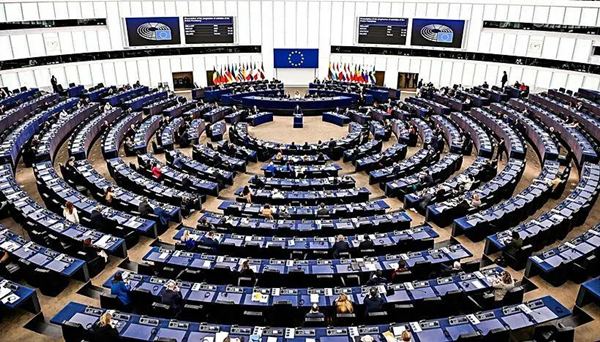
In a single day, MEPs advanced stricter mass deportation rules, rejected controversial mass surveillance of private communications (known as “Chat Control”), and moved forward on dropping tariffs on key U.S. goods as part of a broader transatlantic trade reset.
This might be one of the worst days in history for the EU Bureaucrats:
– Mass deportation proposal passed
– Chat surveillance proposal rejected
– All tariffs on US goods droppedThe centrists have begun voting en masse with the nationalists…
This has never been seen before. pic.twitter.com/UWokIJ4tjo
— Inevitable West (@Inevitablewest) March 26, 2026
These outcomes reflect a pragmatic and unprecedented alliance between the centre-right European People’s Party (EPP) and right-wing to so-called ‘far-right’ groups such as the Patriots for Europe (PfE), European Conservatives and Reformists (ECR), and others. For the first time in years, traditional “firewalls” isolating nationalist voices have cracked, forcing Commission President Ursula von der Leyen’s agenda into retreat on sovereignty, borders, digital rights, and economic realism.
1. Mass Deportations Advance: A Tougher EU Return Regulation
The Parliament voted overwhelmingly to launch inter-institutional negotiations on a reformed EU Return Regulation – often called the “Deportation Regulation” by critics. The measure aims to make it far easier to deport rejected asylum seekers and irregular migrants. Key provisions include:
- Extended detention periods (potentially up to 24 months or more in some cases).
- EU-wide recognition of return decisions.
- Creation of “return hubs” – offshore detention and processing centers in third countries outside the EU.
- Stronger cooperation requirements from returnees and fewer procedural safeguards.
The vote builds on earlier committee approvals and the 2024 Migration Pact (full implementation due June 2026). Centre-right and right-wing MEPs formed a clear majority, overriding opposition from Greens, Socialists, and liberals who warned of a “historic setback for refugee rights.” The International Rescue Committee (IRC) condemned the move as leading to more raids, criminalization, and detention of vulnerable people.
Supporters argue it addresses years of failed integration, rising irregular arrivals, and public frustration post-2015 and 2022 migration surges. Similar national policies in Italy (under Meloni), Denmark, and the Netherlands have already normalized this harder line.
2. Chat Control Defeated: A Victory for Digital Privacy
In a nail-biter described as a “voting thriller,” MEPs rejected attempts to expand or extend untargeted mass scanning of private chats, messages, and photos for child sexual abuse material (CSAM). A narrow amendment (passed by a single-vote margin in key steps) limits any future scanning to targeted, judicially supervised cases involving suspected individuals or groups – explicitly ruling out blanket surveillance of entire platforms or users.
This effectively ends the temporary “Chat Control 1.0” derogation’s broader rollout and aligns with the Parliament’s long-standing 2023 mandate against indiscriminate monitoring. Digital rights advocates, including Pirate MEP Patrick Breyer and groups like DigitalCourage, hailed it as a historic win against Big Tech and Commission overreach. Critics had long argued the proposal violated fundamental rights and risked breaking end-to-end encryption.
The Commission and most of the Council had pushed hard for extensions, but Parliament’s stand – backed by a cross-ideological privacy coalition – prevailed. It sends a clear signal: Europe is prioritizing targeted security tools over mass surveillance.
3. Tariffs on U.S. Goods Dropped: Pragmatic Trade Reset with Trump’s America
MEPs advanced ratification steps for elements of the 2025 EU-U.S. Turnberry trade deal (struck last July in Scotland). This includes eliminating or suspending EU tariffs on major U.S. industrial and agricultural imports in exchange for American concessions and a 15% ceiling on most EU exports to the U.S. Earlier retaliatory tariffs on billions in U.S. goods were effectively sidelined.
The move comes amid ongoing Trump-era pressures – including threats of universal tariffs, LNG supply leverage, and even Greenland-related tensions. Committee votes (e.g., 29-9 in the trade committee) reflected realism: Europe needs stable U.S. energy and defense ties amid Ukraine stalemate and Iran conflict fallout. Full parliamentary approval is expected soon, with safeguards added to protect EU interests.
This de-escalation marks a shift from protectionist posturing to pragmatic partnership — one that right-wing voices have long advocated.
The Political Earthquake: Centrists Align with Nationalists
What makes Thursday truly historic is the voting pattern. EPP MEPs, traditionally the anchor of pro-EU centrism, repeatedly sided with PfE, ECR, and other right-wing blocs – overriding the old Renew-S&D-Green coalition. This “Venezuela majority” (named after an earlier symbolic vote) has now delivered on concrete policy.
Von der Leyen, re-elected in 2024 with broad centrist support, is reportedly furious. Multiple no-confidence motions from the Patriots have failed so far, but her Green Deal, globalist migration, and regulatory agenda face constant erosion. So-called ‘far-right’ groups now act as kingmakers, reflecting the post-2024 election reality where populist parties dominate polls in France (RN), Germany (AfD), Austria (FPÖ), and beyond.
Broader Context: Europe’s Rightward Shift in 2026
These votes are not isolated. They mirror a continent-wide backlash against open borders, digital overreach, inflation/energy crises, and perceived bureaucratic elitism. National trends reinforce the momentum:
- France: Marine Le Pen’s RN leads polls ahead of 2027.
- Germany: AfD hits record highs in western states. (ER: AfD started in the old East Germany)
- Hungary: Viktor Orbán faces a tough April 12 election but frames the EU as the real threat.
- Italy: Giorgia Meloni’s government remains stable and influential. (ER: For now. She just lost an important referendum.)
Upcoming local and national tests – plus full implementation of the Migration Pact in June – will determine if rhetoric translates to results. Farmers’ protests, youth discontent, and security concerns continue to fuel the shift.
Implementation Challenges and the Road Ahead
While today’s votes are symbolic victories for sovereignty advocates, real change will take time. Return hubs require third-country agreements; Chat Control’s targeted approach still needs enforcement; trade safeguards could face U.S. pushback. Courts, NGOs, and some member states are expected to challenge the hardest edges.
Yet the Overton window has permanently shifted. The old centrist consensus is fracturing. As one MEP from the Patriots group put it anonymously: “We’re at a tipping point.”
Europe isn’t undergoing a full revolution overnight, but Thursday’s actions crystallized a new pragmatic realism. Voters demanded borders, privacy, and economic common sense – and for the first time, a critical mass of MEPs listened. Whether this delivers tangible improvements before the next electoral cycle will define the decade.
Source
************
Published to The Liberty Beacon from EuropeReloaded.com


••••
The Liberty Beacon Project is now expanding at a near exponential rate, and for this we are grateful and excited! But we must also be practical. For 7 years we have not asked for any donations, and have built this project with our own funds as we grew. We are now experiencing ever increasing growing pains due to the large number of websites and projects we represent. So we have just installed donation buttons on our websites and ask that you consider this when you visit them. Nothing is too small. We thank you for all your support and your considerations … (TLB)
••••
Comment Policy: As a privately owned web site, we reserve the right to remove comments that contain spam, advertising, vulgarity, threats of violence, racism, or personal/abusive attacks on other users. This also applies to trolling, the use of more than one alias, or just intentional mischief. Enforcement of this policy is at the discretion of this websites administrators. Repeat offenders may be blocked or permanently banned without prior warning.
••••
Disclaimer: TLB websites contain copyrighted material the use of which has not always been specifically authorized by the copyright owner. We are making such material available to our readers under the provisions of “fair use” in an effort to advance a better understanding of political, health, economic and social issues. The material on this site is distributed without profit to those who have expressed a prior interest in receiving it for research and educational purposes. If you wish to use copyrighted material for purposes other than “fair use” you must request permission from the copyright owner.
••••
Disclaimer: The information and opinions shared are for informational purposes only including, but not limited to, text, graphics, images and other material are not intended as medical advice or instruction. Nothing mentioned is intended to be a substitute for professional medical advice, diagnosis or treatment.



Leave a Reply