

Free speech victory in Germany after top court issues two landmark rulings
Free speech in Germany has been under extreme threat in recent years, but two new landmark rulings may help reverse the tide…
ReMIX NEWS
The wave of police searches and prosecutions in Germany may be facing a new hurdle after Germany’s top court, the Constitutional Court, issued two landmark rulings strengthening freedom of expression. However, Fatina Keilani, editor in Welt’s freedom of expression department, said that these two decisions have gone largely unnoticed by the public, an oversight that she finds remarkable.
Writing in Welt, Keilani reports that the Federal Constitutional Court in Karlsruhe handed down two resolutions in December that push back against what she describes as hasty convictions for insults. The rulings stem from two separate cases in which individuals used sharp, even offensive language against public officials and medical staff — and were criminally sentenced for it.
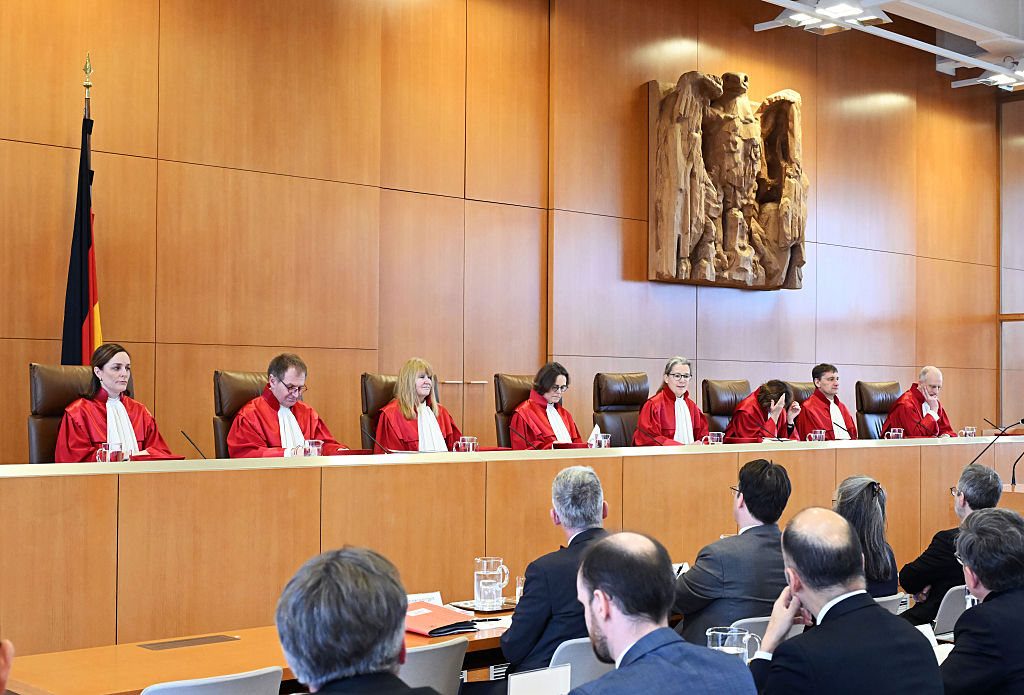 (Photo by Uli Deck/picture alliance via Getty Images)
As Remix News has extensively reported, there have been hundreds, if not thousands, of such cases in recent years. Some of these cases have even attracted international attention and led to questions about freedom of speech and growing repression in Germany.
Just late last month, German prosecutors launched investigations into dozens of comments under just one post criticizing Chancellor Friedrich Merz, with one user calling him “Pinocchio.” A number of constitutional lawyers were quick to slam the investigations, with one labeling it “hysterical madness.”
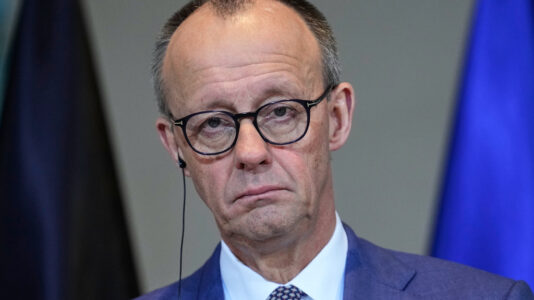
‘Hysterical madness’ – German prosecutors launch investigation of elderly man who described Chancellor Merz as ‘Pinocchio’
In the digital age, even a wooden fairy tale character can trigger a police investigation, at least in Germany. A pensioner from Heilbronn is currently finding himself in the crosshairs of the law after a social media comment regarding Federal Chancellor Friedrich Merz and Baden-Württemberg Prime Minister Winfried Kretschmann in which he allegedly referred to … Continue reading
_________
Now, Germany’s top court is strengthening freedom of expression at a worrying time.
The first case involved a retired police officer whose son attended a high school during the Covid pandemic. Angered by the school’s testing requirements, the father sent the headmaster a series of emails accusing him of serving a “fascist system and its henchmen” and of “fascist cadre obedience.” The Göppingen District Court sentenced him to a fine of 70 daily rates of €80 each for insult. He lost every appeal before taking his case to Karlsruhe — where he finally prevailed.
The Constitutional Court found that his right to freedom of expression had been violated, ruling that the lower courts had not examined the meaning of his statements carefully enough, nor struck an adequate balance between free expression and the protection of personality.
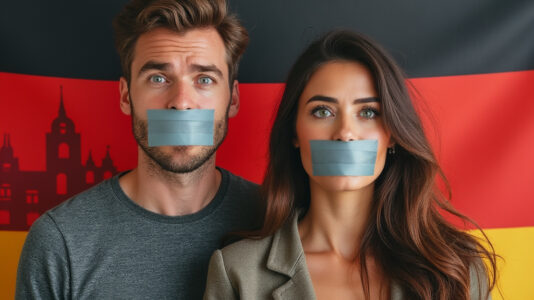
Three-quarters of Germans believe fear of repercussion is silencing free speech
Freedom of expression in Germany is being increasingly constrained, with 74 percent of citizens believing people are holding back their opinions out of fear of repercussions, according to a new survey by Insa. This growing trend is illustrated by recent high-profile cases, such as individuals facing criminal convictions for insulting politicians on social media and … Continue reading
___________
Keilani quotes the court directly: “Part of this freedom is that citizens can attack officials they consider responsible in an accusatory and personalized way for their way of exercising power, without having to fear that the personal elements of such statements are removed from this context and form the basis for drastic judicial sanctions.”
The second case involved a man who had been placed in a psychiatric hospital on multiple occasions and subjected to coercive measures. In a letter to his lawyer in 2023, he described hospital staff as a “psychiatric mob.” When he applied to have the letter formally served, a senior bailiff refused on the grounds that its content was punishable. The Stuttgart Higher Regional Court upheld that refusal — but Karlsruhe disagreed.
The Constitutional Court was pointed in its criticism, noting that the Higher Regional Court’s entire reasoning had been reduced to just two sentences, and that it had made no real weighing of the fundamental right to free expression at all. The case has been sent back for reconsideration.
For Keilani, both rulings carry a significance that extends beyond the individual cases. She situates them within a broader climate of concern, noting that “numerous decisions against freedom of expression have recently raised doubts in Germany about the rule of law and about the stability of the courts with regard to this crucial fundamental right.”
In particular, the wave of politicians weaponizing comments on the internet to launch police raids and drag social media users to court. Against that backdrop, she finds the Karlsruhe decisions reassuring — while also reading them as a firm instruction to lower courts about the standard they must meet when judging speech.

‘Rule of law in Germany is still functioning’ – Victory for the anti-immigration AfD party as court rules against ban on the party – for now
In a preliminary decision, the Cologne Administrative Court has ruled that the powerful domestic spy agency, the Office for the Protection of the Constitution (BfV), is temporarily prohibited from classifying the German political party Alternative for Germany (AfD) as right-wing extremist. “The AfD’s urgent application was largely granted,” writes Welt. The main proceedings are still … Continue reading
___________
These rulings do not necessarily mean, however, that internet users are now able to freely insult politicians without consequence. For one, prosecutors and politicians still have incentive to pursue such cases, both in order to stifle dissent and to intimidate the populace. Social media users may be able to defend themselves in court, but it will likely take years and cost them substantial amounts of money. Furthermore, outright insults without context are still likely to be prosecutable offenses under current German law. For example, insulting a politician’s physical appearance or simply calling them a slur could land social media users in hot water.
Regardless, the country’s top court has drawn a line in the sand, according to Keilani.
She also cited the “urgent decision of the Cologne Administrative Court regarding the classification of the AfD” as also a welcome sign that rule of law still stands in Germany. In that ruling, the Cologne court found that the designation of the AfD as a “confirmed” case of right-wing extremism was not constitutionally sound.
_________
Header featured image (edited) credit: Org. post content. Emphasis added by (TLB)
••••

••••
Stay tuned…

••••
The Liberty Beacon Project is now expanding at a near exponential rate, and for this we are grateful and excited! But we must also be practical. For 7 years we have not asked for any donations, and have built this project with our own funds as we grew. We are now experiencing ever increasing growing pains due to the large number of websites and projects we represent. So we have just installed donation buttons on our websites and ask that you consider this when you visit them. Nothing is too small. We thank you for all your support and your considerations … (TLB)
••••
Comment Policy: As a privately owned web site, we reserve the right to remove comments that contain spam, advertising, vulgarity, threats of violence, racism, or personal/abusive attacks on other users. This also applies to trolling, the use of more than one alias, or just intentional mischief. Enforcement of this policy is at the discretion of this websites administrators. Repeat offenders may be blocked or permanently banned without prior warning.
••••
Disclaimer: TLB websites contain copyrighted material the use of which has not always been specifically authorized by the copyright owner. We are making such material available to our readers under the provisions of “fair use” in an effort to advance a better understanding of political, health, economic and social issues. The material on this site is distributed without profit to those who have expressed a prior interest in receiving it for research and educational purposes. If you wish to use copyrighted material for purposes other than “fair use” you must request permission from the copyright owner.
••••
Disclaimer: The information and opinions shared are for informational purposes only including, but not limited to, text, graphics, images and other material are not intended as medical advice or instruction. Nothing mentioned is intended to be a substitute for professional medical advice, diagnosis or treatment.


Leave a Reply