
General Mills to Remove Synthetic Food Dyes, Starting With Cereals
The company’s recent reformulation changes will ensure the entire catalog of products offered will be without colors. ~CEO Jeff Harmening
By Naveen Athrappully | The Epoch Times
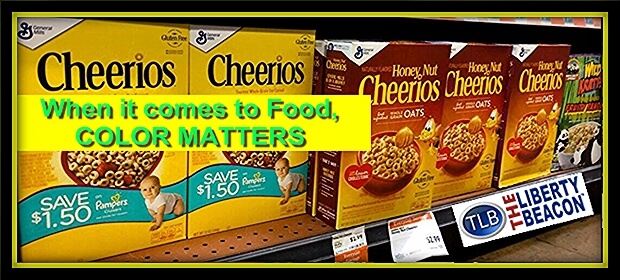
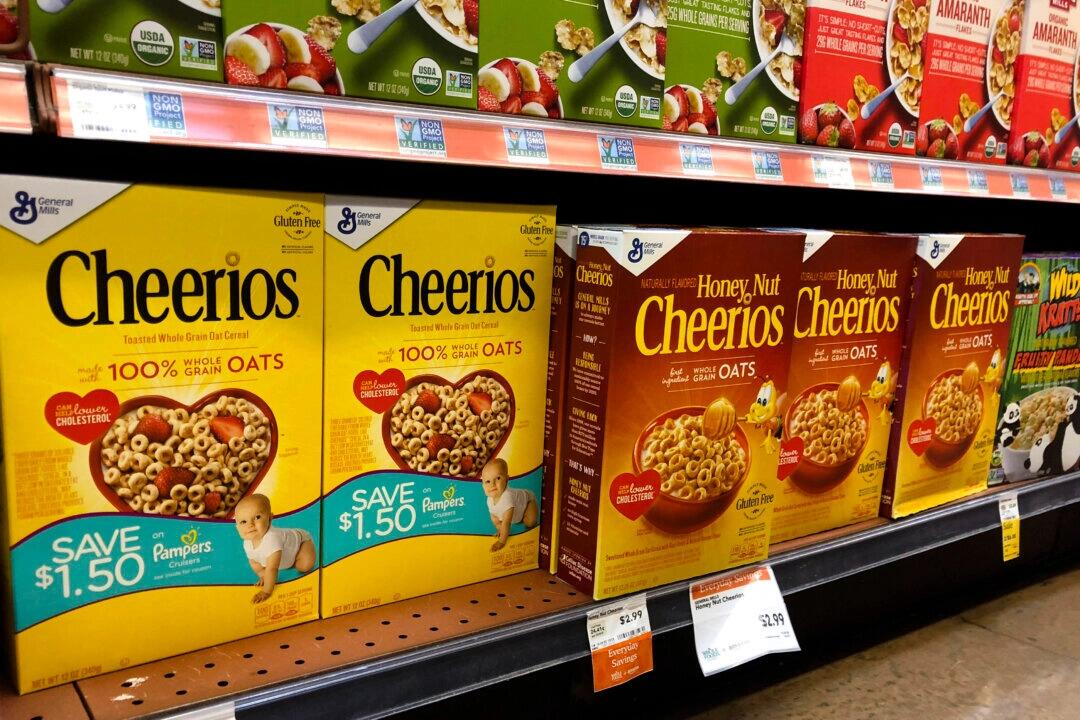
General Mills, which owns a wide range of snack and baked products in the United States, announced plans to remove food colors from all its products, in a June 17 statement.
Based in Minnesota, some of the company’s popular brands include Cheerios, Nature Valley, Blue Buffalo, Häagen-Dazs, Old El Paso, Pillsbury, Betty Crocker, Totino’s, and Annie’s.
In the press release, the company said it will remove synthetic dyes “from all its U.S. cereals and all K-12 school foods by summer 2026. Additionally, the company will work to remove certified colors from its full U.S. retail portfolio by the end of 2027.”
General Mills clarified that the change will only impact a small portion of its school portfolio as “nearly all” of its school offerings are made without food colors. Similarly, 85 percent of the full U.S. retail portfolio is currently made without colors.
 Via Lisa Baertlein/Reuters
Jeff Harmening, company chairman and CEO, said that the company’s recent reformulation changes will ensure the entire catalog of products offered will be without colors.
General Mills’s announcement followed a statement by another major corporation, Kraft Heinz, on the same day.
Heinz said on Tuesday that it will not launch any new products with artificial colors in the United States and will remove the additives from its existing product portfolio by the end of 2027.
The companies’ announcements follow a call by the Department of Health and Human Services (HHS), along with the Food and Drug Administration (FDA), to phase out all petroleum-based synthetic dyes from the nation’s food supply, as part of the broader Make America Healthy Again initiative.
“For too long, some food producers have been feeding Americans petroleum-based chemicals without their knowledge or consent,” HHS Secretary Robert F. Kennedy Jr. said in an April 22 statement.
Kennedy said that the “poisonous compounds” offered no nutritional benefits and adversely impacted children’s health and development.
The federal administration will work with companies to “get these toxic dyes out of the foods our families eat every day,” Kennedy said.
FDA commissioner Marty Makary said that the agency asked food companies to substitute artificial colors with “natural ingredients for American children as they already do in Europe and Canada,” citing an epidemic of childhood diabetes, obesity, depression, and attention-deficit/hyperactivity disorder (ADHD).
According to the statement, the FDA is fast-tracking the review of calcium phosphate, Galdieria extract blue, gardenia blue, butterfly pea flower extract, and other natural alternatives to synthetic food dyes.
Meanwhile, two synthetic colors, Citrus Red No. 2 and Orange B, which can currently be used to color hot dogs and sausages, are being phased out of the food supply.
Makary cited a randomized trial which found that artificial dyes in the diet resulted in increased hyperactivity in 3-, 8-, and 9-year-olds.
Major Brands and Food Colors
Since the HHS announcement, major brands and corporations have lined up to remove synthetic food dyes from their offerings.
WK Kellogg, for example, announced it is reformulating cereals served in schools so that they no longer include FD&C colors by the 2026–27 school year. (FD&C refers to the federal Food, Drug, and Cosmetic Act of 1938.)
“We know that students have limited choice in what they eat at school, so we will only offer them food with lower sugar, whole grains and colors from natural sources,” said the company on its Commitment to Transparency, Quality, and Safety webpage. “In addition, we have already updated our innovation program and will not be launching any new products with FD&C colors, beginning in January 2026.”
In an earnings call last month, Tyson Foods CEO Donnie King said that products containing petroleum-based synthetic dyes will be reformulated and the colors will be removed from the production process.
Tyson is one of the largest meat companies in the country, producing approximately 20 percent of the beef, pork, and chicken in the United States.
Walmart’s Sam’s Club said it would eliminate more than 40 ingredients, including artificial colors and aspartame, from its private-label brand Member’s Mark by the end of this year.
Other major brands undergoing the transformation include PepsiCo and In-N-Out Burgers.
***
Reuters contributed to this report.
_________
Header featured image (edited) credit: Org. post content. Emphasis added by (TLB)
••••

••••
Stay tuned to …

••••
The Liberty Beacon Project is now expanding at a near exponential rate, and for this we are grateful and excited! But we must also be practical. For 7 years we have not asked for any donations, and have built this project with our own funds as we grew. We are now experiencing ever increasing growing pains due to the large number of websites and projects we represent. So we have just installed donation buttons on our websites and ask that you consider this when you visit them. Nothing is too small. We thank you for all your support and your considerations … (TLB)
••••
Comment Policy: As a privately owned web site, we reserve the right to remove comments that contain spam, advertising, vulgarity, threats of violence, racism, or personal/abusive attacks on other users. This also applies to trolling, the use of more than one alias, or just intentional mischief. Enforcement of this policy is at the discretion of this websites administrators. Repeat offenders may be blocked or permanently banned without prior warning.
••••
Disclaimer: TLB websites contain copyrighted material the use of which has not always been specifically authorized by the copyright owner. We are making such material available to our readers under the provisions of “fair use” in an effort to advance a better understanding of political, health, economic and social issues. The material on this site is distributed without profit to those who have expressed a prior interest in receiving it for research and educational purposes. If you wish to use copyrighted material for purposes other than “fair use” you must request permission from the copyright owner.
••••
Disclaimer: The information and opinions shared are for informational purposes only including, but not limited to, text, graphics, images and other material are not intended as medical advice or instruction. Nothing mentioned is intended to be a substitute for professional medical advice, diagnosis or treatment.



Leave a Reply