

Some Tales from the Darkside
CIA’s Iranian operations have often been problematical
By Philip Giraldi as posted at The Ron Paul Institute
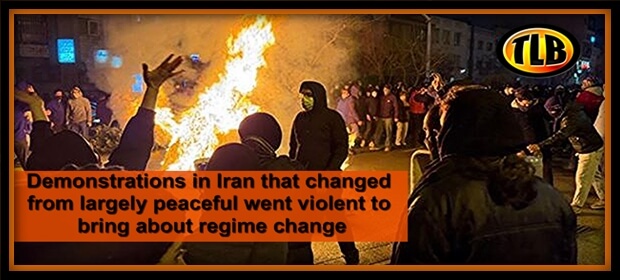
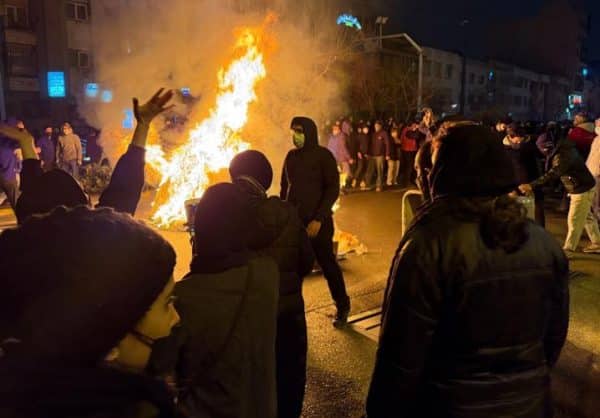
The recent demonstrations in Iran that may have killed more than 5,000 civilians and security officers changed from largely peaceful to violent when a number of “agitators” got involved and sought to turn the gatherings focused on the poor economy into a drive to bring about regime change. It has been suggested that the sometimes-armed outsiders who stirred the pot were organized and trained by foreign intelligence services, most specifically the Central Intelligence Agency (CIA) and the Israeli Mossad. In the event, the apparent plan to bring down the Iranian government failed when Tehran’s own intelligence and security services were able to intercept and decode the Starlink communications that the plotters were using after the phones and internet were turned off. Armed with information on who, what when and where the authorities were able to make mass arrests and shut down the planned insurgency.
As it happens, during my employment with the Agency I spent considerable time on what were characterized as “Iranian Ops,” an organizational focus much driven by the hostage crisis at the former US Embassy in Tehran. While that was occurring and in its immediate aftermath, everyone in the United States government learned to hate Iran and the intelligence service focus on punishing that nation for its daring to change governments without Washington’s consent became a part of the Operational Directives of several major overseas stations.
One of the things that was quickly learned in the wake of the 1979 Islamic Revolution was that even though the US government had been closely involved in many ways with that of Shah Reza Pahlavi the level of understanding of how Iran operated politically and socially was only poorly understood. This led to the helter-skelter CIA development of frequently pointless relationships with the various ethnic and religious groups in Iran that did not necessarily share the views espoused by the Mullahs who replaced the Shah. Contacts were made with the Kurds, Arabs, Armenians and Baluchis who lived with considerable independence in their own corners of Iran as well as with supporters of the former ruler and with liberal secularists who despised both the “imperial” regime that had been as well as the rather more oppressive government that had replaced it. Ironically, one such group, the Mojahedin e-Khalq (MEK) was a radical clone that was founded in the 1960s and then oscillated between anti-monarchical revolt and Marxist-Islamist ideology. It played a role in Iran’s 1979 Revolution and then operated outside the country. The US had previously listed it as “terrorist” after it assassinated a US military officer and also murdered three Rockwell International employees, though it quickly became a new friend and was eventually repatriated to Camp Ashraf in Albania, where it still survives and operates under US protection as a “political organization.” It presumably has a relationship with both the CIA and Mossad.
I entered the scene in the 1980s when I was assigned to Turkey. Interestingly, Turkey, which shared a long border with Iran, was the only country in the region that still allowed Iranian visitors to enter without a visa or any kind of prior clearance. This meant in practice that many Iranians would head straight to the US Consulate General in Istanbul seeking a visa to emigrate to America. Visas were indeed issued to those Iranians who had close family already as legal residents or citizens in the US but for others the door was closed. Those who therefore had to return to Iran wound up being interviewed by me to determine if they had any intelligence value, which meant determining what could they do for us or tell us from back in Iran. To those meeting the requirements and willing to go that route, I would promise them a visa and travel money after a couple of years of keeping us informed of developments using secret and secure two way communications. Employing that lure, I managed to recruit a handful of former Iranian army officers and government officials who were willing to take the risk.
CIA’s Iranian operations at that time were run out of Germany, so once an Iranian signed on board with me I was out of the picture and the case would be handled by a Case Officer and other staff located at the German station. This included occasional meetings in Turkey including one notable instance in which I did get involved when a transiting officer from Germany was supposed to be in Turkey to meet with several agents who had made the trip from Iran. The officer did not return to Germany on schedule, however, and a panicked message from the station management asked me to go to the hotel he was supposed to stay at to see if/when he had checked out. I went to the hotel and found myself suddenly surrounded by four armed policemen. In spite of the fact that I was carrying a diplomatic identity card and was plausibly seeking a missing American, I was arrested and found myself in the city’s “foreigners’ prison.” Once there, the police tried to figure out what to do with a diplomat who had committed no crime and I spent the night playing cards with the prison warden.
On the next day I was sprung by friends from the local Turkish military intelligence office who explained some of what had happened. I later learned that the man from Germany had been in Turkey providing new false passports for the use of his Iranian agents and to pay them. He accomplished both tasks but was in a hurry to get to the airport so he stuffed the old fake passports into his jacket pocket. A security search at the airport revealed the pocket full of fake passports and he was arrested. It was assumed that he was a drug dealer and his hotel had been staked out by police to catch any accomplices. I was the presumed accomplice but was able to provide my cover story, which was that the man had disappeared and his wife in Germany had contacted the US Embassy to try to find him. That “try to find him” guy was me. I was released with an apology and I later learned that the German associate had been eventually freed through some kind of diplomatic exchange.
So I became famous for spending a night in a Turkish prison. And there is one other interesting tale about the Iranian operations. I few years later I was in Spain. One morning I opened up the International Herald Tribune and there on page two was a story about how the Iranians had rolled up a US spy ring. The news report, clearly derived from a press release by the Iranian foreign and interior ministries, described in some detail how the office that monitored foreign communications including the mail, had discovered a group of letters that had apparently been written to American secret agents numbering in the twenties, all of whom had been arrested. It was expected that they would be dealt with severely and indeed they were, with a follow-up report indicating that most of them had been executed, presumably after undergoing torture.
I was very upset by the story because I believed that those who had been identified and arrested included the five or so men whom I had recruited. I queried through channels to find out what was going on. It turned out that the agents in question were managed through invisible writing messages which use a chemical ink that can only be revealed by applying heat or a special fluid that reveals the text. To pretend that the letter with the invisible writing is genuine if reviewed by government censors, a cover letter using normal ink is written over the top of the invisible text. To prepare such letters is an onerous task much disliked and in this case twenty-plus such letters were sent to all the American agents in Iran using that method to communicate. Unfortunately, whoever prepared the letters got lazy and wrote exactly the same cover letter twenty plus times before he or she mailed the letters from the same German mailbox, meaning that the letters had all the same postmark and all had the same handwriting on the addresses, arousing the interest of Iranian postal inspectors who opened one and immediately became suspicious. What they saw made them open a few more and they noted that all the letters were the same. End of story for the poor bastards on the receiving end. As far as I know the CIA officer who screwed up the letters was not punished. I guess the point I am trying to make is that people who work for sometimes highly esteemed government agencies are just as capable of making bad decisions as anyone else.
Reprinted with permission from Unz Reivew.
About The Author
Philip Giraldi is an American columnist, commentator and security consultant. He is the Executive Director of the Council for the National Interest, a role he has held since 2010.
Header featured image (edited) credit: Org. post content. Emphasis added by (TLB) editors
••••

••••
Stay tuned…

••••
The Liberty Beacon Project is now expanding at a near exponential rate, and for this we are grateful and excited! But we must also be practical. For 7 years we have not asked for any donations, and have built this project with our own funds as we grew. We are now experiencing ever increasing growing pains due to the large number of websites and projects we represent. So we have just installed donation buttons on our websites and ask that you consider this when you visit them. Nothing is too small. We thank you for all your support and your considerations … (TLB)
••••
Comment Policy: As a privately owned web site, we reserve the right to remove comments that contain spam, advertising, vulgarity, threats of violence, racism, or personal/abusive attacks on other users. This also applies to trolling, the use of more than one alias, or just intentional mischief. Enforcement of this policy is at the discretion of this websites administrators. Repeat offenders may be blocked or permanently banned without prior warning.
••••
Disclaimer: TLB websites contain copyrighted material the use of which has not always been specifically authorized by the copyright owner. We are making such material available to our readers under the provisions of “fair use” in an effort to advance a better understanding of political, health, economic and social issues. The material on this site is distributed without profit to those who have expressed a prior interest in receiving it for research and educational purposes. If you wish to use copyrighted material for purposes other than “fair use” you must request permission from the copyright owner.
••••
Disclaimer: The information and opinions shared are for informational purposes only including, but not limited to, text, graphics, images and other material are not intended as medical advice or instruction. Nothing mentioned is intended to be a substitute for professional medical advice, diagnosis or treatment.



Leave a Reply