

Tariff Windfall Drives Surprise $27 Billion US Budget Surplus
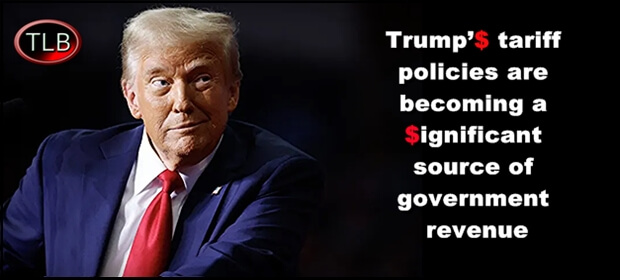
Trump’s tariff policies are becoming a significant source of government revenue
Tom Ozimek | The Epoch Times
New data from the Treasury Department show that surging tariff revenues in June helped the U.S. government post an unexpected budget surplus of $27 billion, offering a rare fiscal bright spot amid persistently high federal deficits and suggesting that President Donald Trump’s tariff policies are becoming a significant source of government revenue.
After running a $316 billion deficit in May, the government recorded a surplus of just over $27 billion last month, according to data released on July 11 by the Treasury Department. The tariff windfall helped narrow the fiscal year-to-date deficit to $1.34 trillion—a slight 1 percent improvement from the same period last year. By contrast, June 2024 saw a $71 billion deficit.
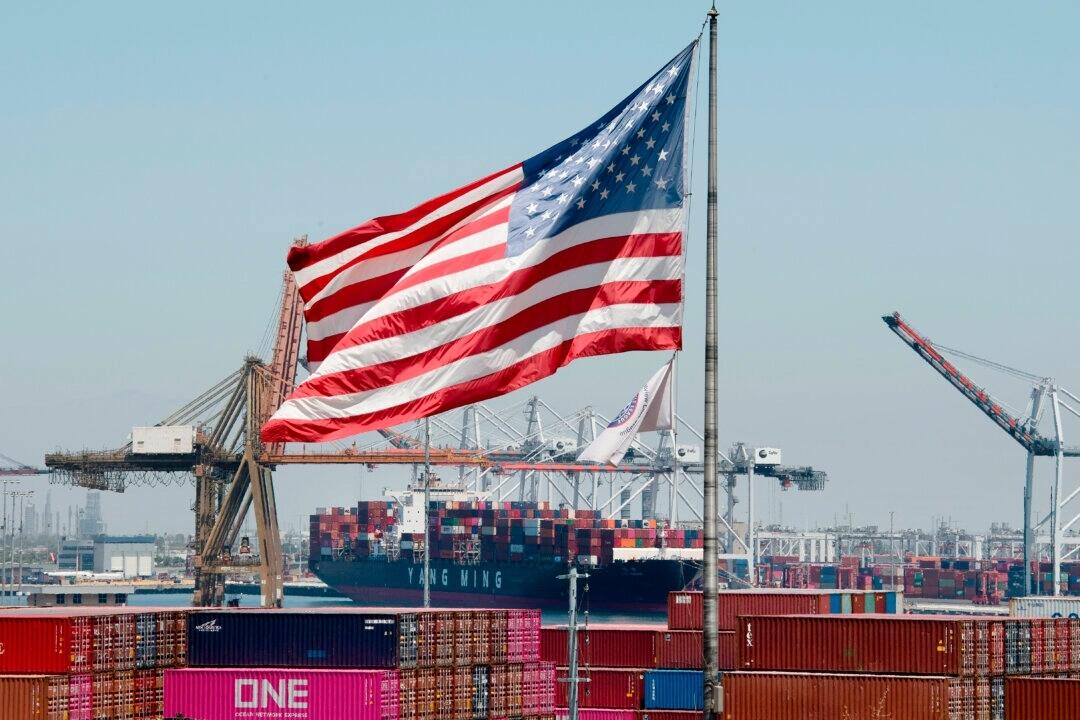
A key driver of the improved balance was a record-breaking surge in customs duties. The Treasury data released on Friday show that tariff collections soared to $27 billion in June alone, pushing total tariff revenues since October to $108 billion—the highest ever recorded for the first nine months of a fiscal year. June’s haul marked a significant jump from May’s prior record of $22 billion and was about 93 percent higher than the $56 billion collected during the same nine-month span of the previous year.
So far in July, customs duties have added another $2.4 billion to federal coffers, according to daily Treasury figures.
Treasury Secretary Scott Bessent has predicted even higher tariff revenues in the months ahead. Speaking at a July 8 White House Cabinet meeting, he said the United States is on track to collect $300 billion by the end of calendar year 2025, noting that the “major” tariffs imposed under the Trump administration did not start until the second quarter.
Since returning to the White House for a second term, Trump has imposed 10 percent universal tariffs on trading partners, along with reciprocal tariffs announced in April on a number of nations, depending on the trade barriers they have with the United States. Trump initially applied a 90-day pause to most of the reciprocal tariffs, and later signed an executive order that extended the reprieve to Aug. 1.
In recent days, the president sent letters to several countries—including Japan, South Korea, and Thailand—informing them that reciprocal tariffs ranging from 25 to 40 percent will be imposed after Aug. 1 unless they agree to reduce trade barriers and negotiate bilateral deals.
Trump has said the higher duties will substantially boost government revenue.
“The big money will start coming in on Aug. 1st. I think it was made clear today by the letters that were sent out yesterday and today,” he said during the Cabinet meeting.
Bessent also cited a June 4 report from the Congressional Budget Office projecting that tariff revenues could total $2.8 trillion over the next decade—a figure he said the administration believes is understated.
Trump said he won’t extend the Aug. 1 deadline for countries to start paying reciprocal tariffs, signaling a firm stance after earlier suggesting flexibility for nations offering trade concessions.
In one recent round of letters, Trump announced new tariffs as follows: 25 percent on Japan, Kazakhstan, Malaysia, South Korea, and Tunisia; 30 percent on Bosnia and Herzegovina and South Africa; 32 percent on Indonesia; 35 percent on Bangladesh and Serbia; 36 percent on Cambodia and Thailand; and 40 percent on Burma (also known as Myanmar) and Laos.
In each letter, Trump noted that the tariffs might be lowered if countries open their markets and reduce non-tariff barriers, emphasizing that persistent trade deficits pose “a major threat” to U.S. economic and national security.
More recently, Trump sent another round of letters, noting that Algeria, Iraq, Libya, and Sri Lanka will each be charged a 30 percent tariff, Brunei and Moldova will face a 25 percent tariff, and the Philippines will face a 20 percent tariff.
The president has also announced that Canada will face 35 percent tariffs starting on Aug. 1.
__________
Header featured image (edited) credit: Getty Images. Emphasis added by (TLB)
••••

••••
Stay tuned…

••••
The Liberty Beacon Project is now expanding at a near exponential rate, and for this we are grateful and excited! But we must also be practical. For 7 years we have not asked for any donations, and have built this project with our own funds as we grew. We are now experiencing ever increasing growing pains due to the large number of websites and projects we represent. So we have just installed donation buttons on our websites and ask that you consider this when you visit them. Nothing is too small. We thank you for all your support and your considerations … (TLB)
••••
Comment Policy: As a privately owned web site, we reserve the right to remove comments that contain spam, advertising, vulgarity, threats of violence, racism, or personal/abusive attacks on other users. This also applies to trolling, the use of more than one alias, or just intentional mischief. Enforcement of this policy is at the discretion of this websites administrators. Repeat offenders may be blocked or permanently banned without prior warning.
••••
Disclaimer: TLB websites contain copyrighted material the use of which has not always been specifically authorized by the copyright owner. We are making such material available to our readers under the provisions of “fair use” in an effort to advance a better understanding of political, health, economic and social issues. The material on this site is distributed without profit to those who have expressed a prior interest in receiving it for research and educational purposes. If you wish to use copyrighted material for purposes other than “fair use” you must request permission from the copyright owner.
••••
Disclaimer: The information and opinions shared are for informational purposes only including, but not limited to, text, graphics, images and other material are not intended as medical advice or instruction. Nothing mentioned is intended to be a substitute for professional medical advice, diagnosis or treatment.



Leave a Reply