
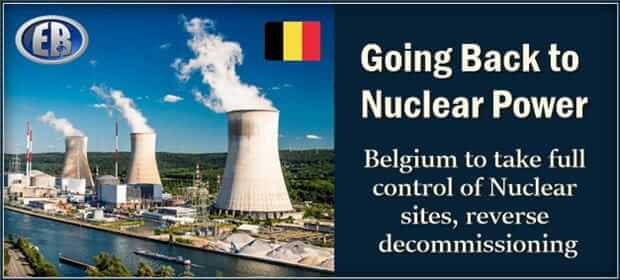
Belgium Plans to Nationalize Nuclear Power Plants

ER Editor: We’ve covered a fair bit about nations going back to nuclear power. This article from a year ago includes mention of a few of those countries. Now it’s Belgium’s turn —

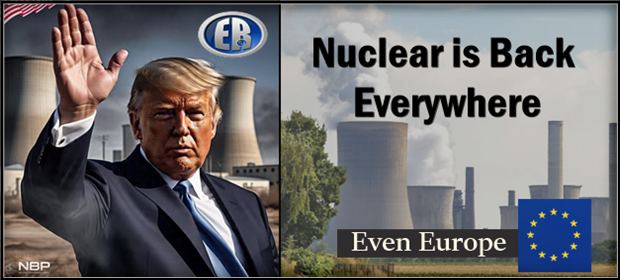
Nuclear Making A Comeback In US, Europe
********
Belgium Plans to Nationalize Nuclear Power Plants

The government is in negotiations with French Engie to take over the seven nuclear plants the company manages in Belgium.

TEC NEWS

In a significant policy shift, Belgium is moving to bring its nuclear power plants under state control. The government says it plans to buy the country’s entire nuclear fleet from French energy company Engie, calling it a key step to secure long-term energy supplies.

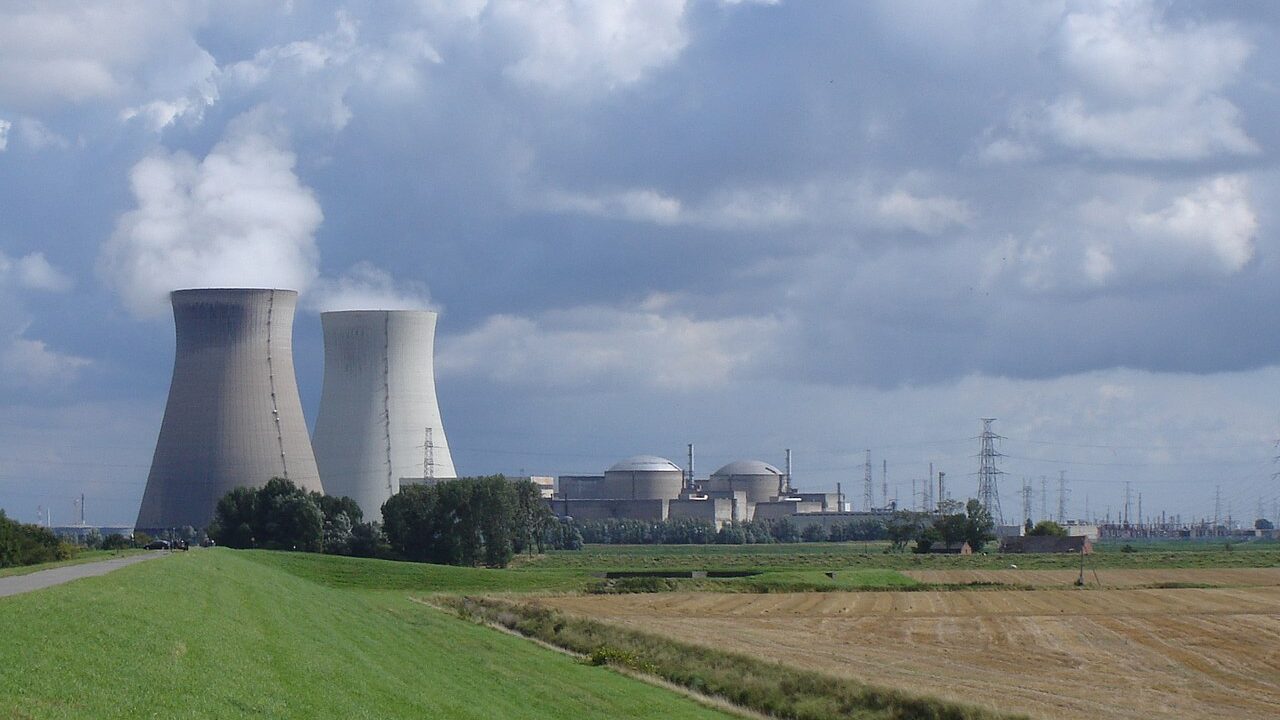
Doel Nuclear Plant in Doel, East Flanders, Belgium.  LimoWreck, CC BY-SA 3.0 <https://creativecommons.org/licenses/by-sa/3.0>, via Wikimedia Commons

.

Prime Minister Bart De Wever said the move is about stability at a time when Europe is dealing with shaky energy markets and geopolitical tensions. “This government is choosing safe, affordable and sustainable energy,” he said in a post on X, pointing to reduced reliance on imported fossil fuels.

Translation: An agreement has been reached with ENGIE to define the conditions and initiate the necessary studies for a full takeover of the Belgian nuclear park. In the meantime, all decommissioning activities are being halted with immediate effect. This government chooses safe, affordable, and sustainable energy. With less dependence on fossil imports and more control over our own supply.

The two sides signed a letter of intent on April 30 to start negotiating a full takeover. That would include all seven reactors, along with staff, infrastructure, and long-term responsibilities like nuclear waste management.

As part of the plan, Belgium is also putting the brakes on shutting down some reactors that were due to be phased out. Only two of the country’s reactors are still functioning—the ones in Doel and in Tihange, whose licenses have already been extended to 2035. The remaining five reactors have been taken off-line and were slated for decommission, a decision that has now been put on hold to potentially reopen them. That effectively pauses a nuclear exit strategy that dates back to the early 2000s, when safety and environmental concerns drove policy.

The new policy shift comes after the latest energy shocks in Europe, following the Russian invasion of Ukraine as well as the Iran crisis surrounding the Hormuz Strait, which exposed how dependent Europe is on imported energy.

For Engie, the deal would mark a step away from nuclear power—a step the company has expressed a desire to take.

“Engie has taken the decision to exit the nuclear sector,” De Wever told VRT News. “We respect that, but a country with nuclear ambitions and an operator that wants out is not a good combination.”

For Belgium, it’s an opportunity to extend reactor lifespans. But it won’t be simple or cheap. Talks are expected to be complicated, with costs for maintaining or restarting older reactors potentially reaching hundreds of millions of euros and timelines stretching from one to five years.

The announcement has drawn sharp criticism from environmental groups and opposition parties, who have raised concerns about aging reactors and the burden on taxpayers. The head of the Flemish Greens, Aimen Horch, called the plan “irresponsible spending of billions,” and has requested clarifications regarding the expected costs from De Wever.

Supporters, meanwhile, argue that nuclear power remains a reliable source of low-carbon power at a time when Europe is under pressure to diversify away from imported fossil fuels. (ER: Curious how the Greens don’t make this argument …)

Negotiations are set to continue over the coming months, with both sides aiming for a final agreement by October 1. The outcome could ripple beyond Belgium, feeding into a wider European debate. In March, European Commission president Ursula von der Leyen called Europe’s earlier move away from nuclear power a “strategic mistake,” as rising global energy tensions renewed concerns about the European Union’s long-term energy security.

Source

Featured image source: https://montel.energy/commentary/nuclear-power-in-benelux-a-tale-of-two-worlds

************

Published to The Liberty Beacon from EuropeReloaded.com

••••

The Liberty Beacon Project is now expanding at a near exponential rate, and for this we are grateful and excited! But we must also be practical. For 7 years we have not asked for any donations, and have built this project with our own funds as we grew. We are now experiencing ever increasing growing pains due to the large number of websites and projects we represent. So we have just installed donation buttons on our websites and ask that you consider this when you visit them. Nothing is too small. We thank you for all your support and your considerations … (TLB)

••••

Comment Policy: As a privately owned web site, we reserve the right to remove comments that contain spam, advertising, vulgarity, threats of violence, racism, or personal/abusive attacks on other users. This also applies to trolling, the use of more than one alias, or just intentional mischief. Enforcement of this policy is at the discretion of this websites administrators. Repeat offenders may be blocked or permanently banned without prior warning.

••••

Disclaimer: TLB websites contain copyrighted material the use of which has not always been specifically authorized by the copyright owner. We are making such material available to our readers under the provisions of “fair use” in an effort to advance a better understanding of political, health, economic and social issues. The material on this site is distributed without profit to those who have expressed a prior interest in receiving it for research and educational purposes. If you wish to use copyrighted material for purposes other than “fair use” you must request permission from the copyright owner.

••••

Disclaimer: The information and opinions shared are for informational purposes only including, but not limited to, text, graphics, images and other material are not intended as medical advice or instruction. Nothing mentioned is intended to be a substitute for professional medical advice, diagnosis or treatment.

Be the first to comment

Leave a Reply

Your email address will not be published.


*