


ER Editor: Hot off the presses is a Reuters report declaring that British Columbia is basically reversing its open-carry drug law that was instituted in January of 2023. It will no longer be legal to carry hard drugs in public spaces. See —
Canada’s British Columbia scraps program to allow drug use in public spaces
OTTAWA, April 26 (Reuters) – The Canadian province of British Columbia on Friday scrapped a much-criticized pilot program that allowed the open use of some illegal drugs, citing the need to maintain public safety.In January 2023, the province said it would stop prosecuting people for carrying small amounts of heroin, meth, ecstasy, or crack cocaine, as part of an effort to fight an overdose crisis.The program was supposed to last three years but last October, amid complaints about rising crime and the dangers posed by unsafe drug supplies, the province backtracked and unveiled plans to ban public use of illicit drugs. … Police will have the power to enforce against drug use in all public places, including hospitals, restaurants, transit, parks and beaches.
See this by the Canadian Independent, with useless provincial leader David Eby announcing his new policy —
WATCH: British Columbia has announced its intention to make hard drugs illegal again in public places
Failed experiment: B.C.’s NDP Premier, David Eby, announces B.C. will now re-criminalize public drug use.
Is this a backpedal because it’s obviously what was always best for the people? Or because he thinks it’s best to try and win back voters?https://t.co/RQ9VfrPu5W pic.twitter.com/dpiuRZPWLt
— Drea Humphrey – Prepping and Politics (@DreaHumphrey) April 27, 2024
💉Video : David Eby announces the recriminalization of hard drug use in most public spaces.
🥂This is a HUGE win British Columbia.🎉
The only thing that would have made it sweeter would be if David Eby fired Dr. Bonnie Henry at this press conference.
No doubt Eby is rocked by… https://t.co/csp6i6bUV4 pic.twitter.com/3v7tQoto0j
— Bruce McGonigal (@bruce_mcgonigal) April 26, 2024
Journalist Aaron Gunn (find him on this site) gives an analysis in this tweet. The war isn’t won yet —
One year after the spectacular failure of the lethal Liberal-NDP experiment to decriminalize hard drugs (including crack, fentanyl and crystal meth), followed by the release of my documentary, Canada is Dying, and a ton of public pressure, Justin Trudeau and David Eby are finally…
— Aaron Gunn (@AaronGunn) April 26, 2024
Through a combination of federal and provincial madness, hard drugs have flooded Vancouver as a matter of policy. A friend of a friend there says there is a warehouse somewhere in Vancouver full of hard drugs, at a secret location of course. Which surely raises the question as to who supplied the government with these quantities. Drug cartels? And at what price? Has taxpayer money gone to criminal cartels, with compliant politicians getting their cut. We haven’t seen these questions asked. Oh, and since a drug crisis was declared in 2016, over 14,200 people have died of drug-related problems. Fourteen thousand. Drug addicts now litter the streets in parts of East Vancouver.
For a glaring look at how bad the problem has become, see the state of a downtown Vancouver hospital below by journalist Rob Shaw. It’s the grim reality of globalist madness.
From 2024 —
Another Globalist Lie – Using Hard Drugs to ‘Reduce Harm’
This Is How Metastatic Immigration Kills a City – This is Everyone’s Future

********
And LifeSite News just put this out on the federal response —
British Columbia should allow addicts to possess even more drugs, federal report suggests
OTTAWA, Ontario (LifeSiteNews) — Despite the drug crisis only worsening since decriminalization, federal researchers are now advocating for British Columbia to allow the possession of even larger quantities of cocaine, claiming that current possession limits don’t allow addicts to buy enough.
According to a federal report published April 23 by Blacklock’s Reporter, the current decriminalization program in British Columbia approved by Prime Minister Justin Trudeau’s government has set cocaine possession limits “too low.”
********
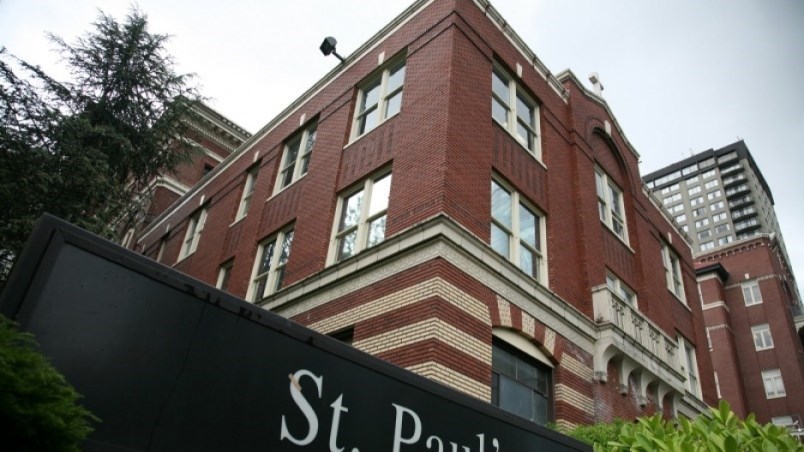
ER: Reality on the ground from earlier this month (April 2024). St. Paul’s is a hospital we are familiar with over several years. It was a normal downtown hospital, never how staff currently describe it. The ‘harm reduction’ approach has clearly endangered everyone, especially the addicts.
Rob Shaw: ‘Outrageous,’ rampant drug use make St. Paul’s unsafe for staff, patients
The conditions in northern B.C. hospitals pale in comparison to what’s happening in Vancouver, a source says
Rampant drug use inside hospital rooms, open drug dealing on the wards and so many overdoses in a rooftop courtyard area that there’s now a tent to protect staff from the rain for when they have to resuscitate people numerous times a day.
“Absolutely there are people throughout that hospital who are dealing and using everywhere,” one nurse who works there told me.
“When we all saw that news thing about Northern Health, we were laughing our asses off, saying they should take a walk down Burrard Street, walk through St. Paul’s.”
The B.C. government has insisted drug use and weapons aren’t allowed inside hospitals, contrary to the Northern Health memo to staff. However, the BC Nurses’ Union says it’s a daily reality for members, which has worsened since decriminalization began last January.
Increasingly, nurses are getting sick from having to walk through toxic plumes of fentanyl from all the drug smoking in rooms, bathrooms and hallways, said the union. Members have said when they complain, they are accused of not being supportive enough of harm reduction.
Perhaps nowhere is the situation worse than at St. Paul’s, which is ground zero for B.C.’s overdose crisis due to its proximity to Vancouver’s Downtown Eastside.
“You can barely walk into some of the rooms, there’s needles and broken crack pipes and dirty food all over the floor,” the nurse told me. (I’m not revealing their name so that they don’t face repercussions for speaking out).
It’s so unsafe, housekeeping refuses to clean certain rooms.
Staff are instructed to give out “burner kits” with clean foil, matches and other paraphernalia to help people safely smoke drugs, said the nurse. Until recently, glass crack pipes were provided as well, said the nurse.
“We are handing out supplies and then we get mad at them for smoking in the hospital,” the nurse said. “We give them the equipment.”
BC United critic Elenore Sturko said the situation at St. Paul’s is unacceptable.
“The drug use there is so out of control, how are we expecting people to actually recover and get better and try to move ahead with some form of treatment and recovery when they are surrounded not only by drug use but also by predatory drug dealers?” she said.
“When we are creating a situation where a person who is at this very vulnerable stage is surrounded by drug use and drug dealing, we are putting a barrier to their recovery right in the hospital.”
More than 14,208 people have died in B.C. due to toxic drugs since the government declared a public health emergency in 2016.
Smoking drugs is now the most popular method for consumption, B.C. officials have said. Yet patients can’t smoke drugs in St. Paul’s fourth floor overdose prevention site. So they go outside to the rooftop garden patio of the Providence building, where drug dealers have taken up court to prey on the audience. Nothing is done to deter them.
“We know they are drug dealers, and yet they come and go,” said the nurse.
Meanwhile, overdoses on the rooftop happen at least daily.
“Our code teams go to resuscitate the same patients over and over again,” said the nurse. “Some of them are visitors, some of them are repeat patients. And [staff] are out there in the snow or pouring rain picking these people up trying to resuscitate them. Now there’s been a tent erected.”
St. Paul’s is also the location of Premier David Eby’s new marquee Road to Recovery program, a first-of-its-kind “seamless” addictions treatment unit that the premier has said will eventually be expanded provincewide.
The program was only possible after a $20 million private donation. But Road to Recovery patients have to walk through an open drug scene just to get to the cafeteria or gift shop.
“We’re trying to help them recover, and then we surround them with the very thing they are trying to recover from—drug use and drug dealers,” said the nurse. “We are working against ourselves at a time when helping people has never been more important.”
The NDP government says the Road to Recovery program has been given special protections, including a requirement visitors leave their belongings at the nursing station, and that smoke breaks are accompanied by staff and occur in a separate area away from the troubled fourth-floor garden.
Those protections aren’t in place for everyone else in the hospital. There, staff aren’t even allowed to search patients’ belongings, nor are they allowed to seize any cocaine, meth, heroin or fentanyl they find, because decriminalization allows for personal possession of those drugs and so they are considered the personal property of patients.
The problems are compounded when someone who is actively using is placed inside a four-patient room with people recovering from other medical conditions, including the elderly. St. Paul’s is an old hospital with few private rooms.
“We have patients in four-bed rooms that have been exposed to patients fighting with their drug dealers in the room and having their personal effects stolen,” the nurse said.
That’s outrageous, said Sturko.
“Would I be comfortable sending my grandmother, who might have a broken hip, and have her lying beside someone who might be smoking crystal meth and have a weapon?” said Sturko. “Probably not.”
Health Minister Adrian Dix has said hospitals have hired additional security to deal with concerns.
But in St. Paul’s, that’s meant contracted “relation security officers,” who wear non-threatening khakis and powder blue shirts, and who aren’t equipped to restrain people having a drug-induced psychotic episode, said the nurse.
“Very well-intentioned, very nice people, but not who you want when you’ve got a six-foot, 250-pound, out of control drug affected person,” said the staffer.
The provincial government has to put some sort of limits on drug possession and use inside hospitals, followed up with actual enforcement, said the nurse.
“There are patients who are drug users themselves that are a little bit farther along in their recovery that beg us not to place them on certain wards … because they know what’s going to happen, they will relapse,” said the nurse.
“People don’t feel safe in the hospital at all.”
Rob Shaw has spent more than 16 years covering B.C. politics, now reporting for CHEK News and writing for Glacier Media. He is the co-author of the national bestselling book A Matter of Confidence, host of the weekly podcast Political Capital, and a regular guest on CBC Radio.
Source
************
Published to The Liberty Beacon from EuropeReloaded.com


••••
The Liberty Beacon Project is now expanding at a near exponential rate, and for this we are grateful and excited! But we must also be practical. For 7 years we have not asked for any donations, and have built this project with our own funds as we grew. We are now experiencing ever increasing growing pains due to the large number of websites and projects we represent. So we have just installed donation buttons on our websites and ask that you consider this when you visit them. Nothing is too small. We thank you for all your support and your considerations … (TLB)
••••
Comment Policy: As a privately owned web site, we reserve the right to remove comments that contain spam, advertising, vulgarity, threats of violence, racism, or personal/abusive attacks on other users. This also applies to trolling, the use of more than one alias, or just intentional mischief. Enforcement of this policy is at the discretion of this websites administrators. Repeat offenders may be blocked or permanently banned without prior warning.
••••
Disclaimer: TLB websites contain copyrighted material the use of which has not always been specifically authorized by the copyright owner. We are making such material available to our readers under the provisions of “fair use” in an effort to advance a better understanding of political, health, economic and social issues. The material on this site is distributed without profit to those who have expressed a prior interest in receiving it for research and educational purposes. If you wish to use copyrighted material for purposes other than “fair use” you must request permission from the copyright owner.
••••
Disclaimer: The information and opinions shared are for informational purposes only including, but not limited to, text, graphics, images and other material are not intended as medical advice or instruction. Nothing mentioned is intended to be a substitute for professional medical advice, diagnosis or treatment.



Leave a Reply